
What Is Rejection Sensitivity Dysphoria?
Rejection sensitivity dysphoria — commonly abbreviated RSD — refers to an intense, often instantaneous emotional response triggered by the perception of being criticized, excluded, or rejected. The operative word is perception. The rejection does not need to be real, intended, or even plausible. It needs only to feel possible.
For most people, rejection stings but for someone with RSD, it detonates. The emotional response is immediate, overwhelming, and feels completely disproportionate even to the person experiencing it. They know, on some level, that they are overreacting. That knowledge does not slow the reaction down.
RSD is most commonly discussed in the context of ADHD, though it also appears in PTSD, borderline personality disorder, and other conditions involving emotional dysregulation. In ADHD specifically, it is not a separate diagnosis, but rather it is a feature of the disorder, and a poorly recognized one. Most ADHD screening tools don’t capture it, and the diagnostic criteria don’t name it. Many patients carry it for decades before anyone gives it a label.
Psychologically, RSD develops at the intersection of a hypersensitive threat-detection system and a lifetime of accumulated social experience. People with ADHD receive significantly more negative feedback growing up — from parents, teachers, peers, employers — than neurotypical individuals. Over time, the nervous system learns to anticipate rejection before it arrives. What begins as a reasonable adaptation to a difficult environment becomes a hair-trigger response that fires indiscriminately, long after the original conditions have changed.
Neurologically, the mechanism runs through the prefrontal cortex — specifically its capacity to regulate emotional salience, or in plain terms, to decide how much a given social signal actually matters. In ADHD, compromised dopamine signaling in the PFC weakens that filtering function. The brain loses its ability to sort genuine threat from ambiguous moment and begins treating both with the same urgency. Pair that with an overactive amygdala and a social pain network that overlaps with the brain’s physical pain circuitry, and you have a nervous system wired to experience social rejection with the same neurological force as a physical injury.
The Neuroscience: Why This Isn’t “Just Being Sensitive”
Rejection sensitivity in ADHD doesn’t exist in isolation — it sits at the intersection of two well-established bodies of research: emotional dysregulation as a core feature of ADHD, and the neuroscience of social pain.
On the emotional dysregulation side, a meta-analysis of 13 studies found that adults with ADHD show significantly elevated emotional dysregulation compared to healthy controls, with a large effect size. Emotional lability showed the strongest signal, and emotional dysregulation correlated with overall ADHD symptom severity — meaning this isn’t a comorbidity sitting alongside the disorder; it’s a dimension of the disorder itself.
At the circuit level, this pattern reflects dysfunction within a striato-amygdalo-prefrontal network. The amygdala fires too easily, the orbitofrontal cortex doesn’t modulate the response effectively, and attempts at emotional suppression may actually reduce control rather than enhance it — because the functional connectivity between the amygdala and prefrontal cortex that makes suppression work is already compromised. The insula, which processes interoceptive signals, also shows aberrant network organization in ADHD, which may explain why emotional states feel so physically overwhelming for these patients.
The social rejection piece adds another layer. Neuroimaging work on social exclusion consistently implicates the dorsal anterior cingulate cortex and anterior insula — regions that overlap with the physical pain matrix. The brain doesn’t distinguish cleanly between being left out and being hurt. More recent work suggests this network may function as a social significance detector, activating in response to inclusion and exclusion alike — meaning it’s calibrated to the question “does this moment matter?” rather than “is this threat real?” For individuals with poor negative emotion differentiation and low self-esteem, this network activates most strongly.
The convergence point is dopamine. Optimal dopamine signaling at D1 receptors in the prefrontal cortex is essential for the PFC’s filtering function — its ability to decide which emotional signals warrant a full-volume response and which can be processed as background noise. In ADHD, that filtering capacity is compromised. A delayed text, a neutral facial expression, a coworker’s offhand comment — each gets processed at the same intensity as a genuine interpersonal threat. This is the mechanism. The patient isn’t too sensitive. Their prefrontal cortex is under-resourced.
What It Looks Like in the Room: Why Reassessment Matters
The patient walks into session and describes a week full of emotional emergencies that, upon examination, were not emergencies at all. There are three features I look for.
Disproportionate intensity. The reaction is a nine out of ten for something most people would rate a two. A boss sends a neutral email that says “let’s connect tomorrow” — and the patient spends the rest of the afternoon convinced they’re about to be fired. A friend takes six hours to reply to a text — and the patient cycles through dread, rehearsal, and self-recrimination for the rest of the evening. The intensity is real. The threat is not.
Compulsive social performance. These patients are often exhausted by the amount of energy they spend managing other people’s perceptions of them. They over-explain, over-apologize, and over-accommodate — not because they want to, but because the fear of what happens if they don’t is genuinely unbearable. They smile through interactions that leave them hollowed out. They’ve learned that performance is protection.
Post-event rumination. After any social interaction with even a hint of ambiguity, the patient replays it on a loop. Did I say something wrong? Do they think I’m weird now? Should I text them to clarify? This can go on for hours or days and is notably resistant to reassurance, which is itself a diagnostic clue. You can tell these patients twenty times that the interaction was fine and it doesn’t land — because the problem isn’t the information; it’s the circuitry processing it.
The Analogy I Use
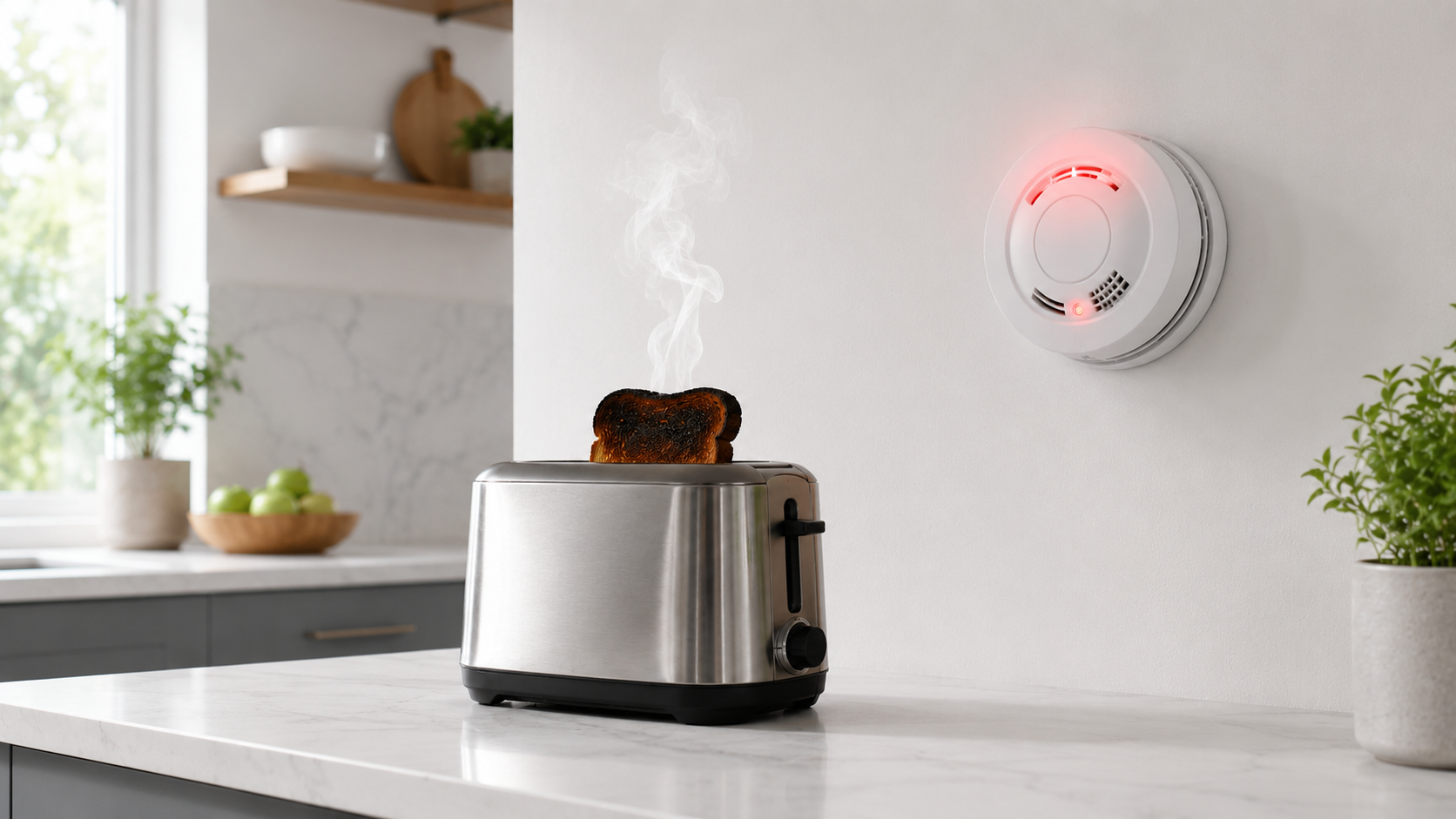
I describe the brain’s emotional system to patients as a smoke detector. Everyone has one. In most people, it activates for actual smoke — real rejection, genuine conflict, meaningful loss. In ADHD, the detector is miscalibrated. It goes off when someone burns toast in the next apartment. The alarm is real. The sound is real. The panic response is real. But there is no fire.
Medication recalibrates the detector so it can distinguish between toast and a fire. Therapy teaches the patient what to do when the alarm goes off — how to check for actual smoke before evacuating the building.
This framing lands well in session because it validates the experience without pathologizing the person. The alarm is just set too high, and we can adjust that!
How I Think About Treatment
The pharmacological logic follows directly from neuroscience. Stimulants increase dopamine and norepinephrine in the prefrontal cortex, restoring filtering capacity. Research on lisdexamfetamine and methylphenidate shows meaningful but modest effects on emotional dysregulation outcomes — these are real effects, but often insufficient as monotherapy when rejection sensitivity is prominent.
For patients where anxiety and dysphoria are significant alongside the RS pattern, an SSRI addresses the serotonergic threat-detection substrate that runs in parallel. Combined pharmacotherapy — stimulant (e.g. methylphenidate) plus SSRI — often outperforms either agent alone for this presentation. Non-stimulants and alpha-2 agonists are worth considering when anxiety is a significant comorbidity or stimulant tolerance is an issue.
The therapy window opens meaningfully after medication stabilization. Before that point, sessions can feel chaotic — the patient jumps from crisis to crisis, has difficulty slowing down enough to reflect, and may describe themselves as “crazy” or “broken.” They are not. Their prefrontal cortex is under-resourced. Once medication provides some baseline regulation, the patient can begin to pause before reacting, and that pause is what therapy needs to work with.
CBT is the evidence-based approach here, targeting the automatic thoughts and behavioral patterns that rejection sensitivity has built over a lifetime. The beliefs often sound like: If I don’t tell people everything, I’m a liar. If someone doesn’t respond immediately, they hate me. If I set a boundary, I’ll be abandoned. These aren’t personality traits. They’re adaptive responses to years of an over-sensitive alarm system.
CBT is the most evidence-backed starting point, but it is not always sufficient on its own, and for some patients, it may not even be the right starting point.
DBT has the strongest non-CBT evidence base for emotional dysregulation in ADHD. Where CBT restructures the thought, DBT teaches what to do with the feeling. Distress tolerance skills for riding out the wave of panic when a partner doesn’t answer. Interpersonal effectiveness skills for navigating ambiguous social encounters without defaulting to over-accommodation. Mindfulness for creating a pause between the alarm and the reaction. A 2025 meta-analysis of 8 RCTs found DBT moderately reduced ADHD symptoms and improved quality of life — and a recent naturalistic study found that DBT skills training specifically improved top-down emotional regulation while emotional lability itself didn’t change, which tells us something important: DBT targets the regulatory deficit, not the alarm. The alarm may stay sensitive. The patient just stops evacuating every time it goes off.
Schema therapy addresses something neither CBT nor DBT fully reaches — the developmental origins of the pattern. Adults with ADHD carry significantly elevated early maladaptive schemas, particularly around failure, emotional inhibition, and social isolation. These don’t form overnight. They are the accumulated residue of years of being told to try harder, calm down, stop overreacting — years of an alarm system that made the world feel more dangerous than it was, and a social environment that confirmed that danger by responding with frustration or withdrawal. No RCTs have tested schema therapy specifically for ADHD emotional dysregulation, but the theoretical fit is strong and the cross-sectional evidence is consistent.
Psychodynamic approaches offer something different still — and something essential for the patient whose rejection sensitivity has shaped not just their thoughts and behaviors, but their fundamental way of relating to other people. Transference-focused psychotherapy in particular targets the black-and-white relational thinking that sits at the core of RS — where a delayed text means abandonment, where not disclosing everything means being a liar, where a neutral facial expression means contempt. Three findings from the TFP literature are directly relevant here. First, TFP uniquely improves reflective functioning — the capacity to generate alternative explanations for ambiguous social cues rather than defaulting to the worst-case interpretation. Second, it improves trust processing — the ability to accurately calibrate who actually requires full transparency and who just needs a polite nod. Third, a combined analysis of two RCTs found that patients with poor baseline reflective functioning benefited more from TFP than from DBT, while patients who could already pause and reflect did better in DBT. The clinical implication: skills-based approaches work best when the patient can already wonder why they react the way they do. When they can’t yet, psychodynamic work may need to come first.
The honest bottom line on treatment is that these modalities are not mutually exclusive. The most effective approach for rejection sensitivity in ADHD likely involves medication optimization as the foundation, with therapy that draws flexibly across frameworks depending on where the patient actually is — CBT for restructuring automatic thoughts, DBT for distress tolerance and interpersonal skills, psychodynamic work for reflective capacity and trust processing, schema work for the deeper developmental patterns. No single manualized protocol captures all of it. And the therapeutic relationship itself — the experience of having your alarm system named and validated rather than dismissed — is a corrective emotional experience that none of them fully account for.
The Bottom Line
Rejection sensitivity in ADHD is not a character flaw, a personality disorder, or a patient who is “too much.” It is a predictable consequence of dopaminergic prefrontal dysfunction — identifiable, explicable, and treatable.
Name it clearly for your patients. The smoke detector analogy works because it tells them the truth: the feeling is real, the alarm is real, but there is often no fire. Medication gives the brain the resources to tell the difference. Therapy builds the skill of checking before evacuating.
That combination — pharmacological recalibration and skills-based intervention — is what actually moves the needle for these patients. And it starts with clinicians who know what they’re looking at when it walks through the door.